
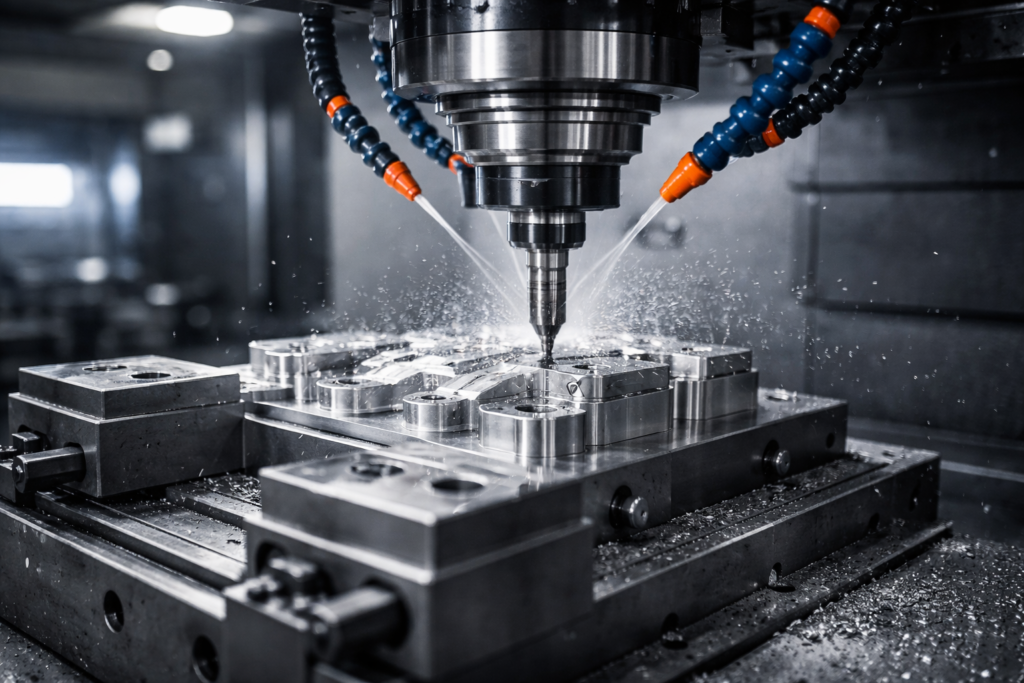
Why Precision Matters in Modern Manufacturing
In the fast-paced world of manufacturing, precision isn’t just a luxury—it’s a necessity. Whether it’s creating intricate aerospace components, automotive parts, or medical implants, accuracy and consistency are crucial to ensuring product quality and functionality.
Traditional machining methods often fall short of meeting the exacting standards required in modern industries. This is where CNC (Computer Numerical Control) machining comes in, revolutionizing the way manufacturers achieve precision, scalability, and efficiency.
This blog will explore how CNC machining has become the backbone of precision manufacturing, supported by real-world examples, technical insights, and actionable takeaways.
The Role of CNC Machining in Precision Manufacturing
1. Precision and Accuracy: The Cornerstone of CNC Machining
CNC machines operate with exceptional accuracy, capable of achieving tolerances as tight as ±0.001 mm. This level of precision ensures consistency across production batches, eliminating errors that can occur with manual machining.
- Example: Indian aerospace company HAL (Hindustan Aeronautics Limited) uses CNC machining to manufacture precision components for aircraft, meeting stringent international quality standards.
2. Consistency Across Large Production Volumes
When manufacturing at scale, maintaining uniformity across hundreds or thousands of parts is a challenge. CNC machines excel at repeatability, ensuring every part produced is identical to the first.
- Case Study: Bharat Forge, one of India’s leading forging companies, leverages CNC technology to produce high-precision automotive components. This has helped the company consistently meet global standards for quality and safety.
3. Complex Geometries Made Simple
Modern industries often require intricate designs that are nearly impossible to achieve with traditional methods. CNC machines, especially 5-axis models, can handle complex geometries with ease, delivering parts with flawless accuracy.
- Example: ISRO (Indian Space Research Organisation) uses CNC machining for satellite and rocket components, where complex designs and uncompromising precision are critical to success.
4. Faster Turnaround Times
CNC machines not only offer precision but also speed up production cycles. By automating tasks that previously required significant manual effort, CNC machining reduces lead times, enabling manufacturers to bring products to market faster.
- Example: Maruti Suzuki, a leading automotive manufacturer in India, integrated CNC machines into its production line, reducing prototyping and production time by 40%.
5. Material Optimization and Waste Reduction
CNC machines are programmed to use materials efficiently, minimizing waste and reducing costs. This makes CNC machining a sustainable option for precision manufacturing.
- Technical Insight: Advanced CNC software optimizes tool paths and cutting speeds, ensuring maximum material utilization.
6. Versatility Across Industries and Materials
From metals like aluminum and titanium to plastics and composites, CNC machines can handle a wide variety of materials. This versatility makes them indispensable for industries ranging from aerospace to consumer electronics.
- Example: Tata Steel uses CNC technology to manufacture precision steel parts for sectors like construction, automotive, and energy.
Technical Insights: How CNC Machines Achieve Precision
- Multi-Axis Capabilities: CNC machines with 3, 4, or 5 axes can produce parts with complex geometries in a single setup.
- Advanced Sensors: Modern CNC machines use real-time monitoring to ensure precision during machining.
- CAD/CAM Integration: Designs created in CAD software are seamlessly converted into machine instructions via CAM, eliminating errors.
- IoT-Enabled Operations: IoT connectivity allows manufacturers to monitor and adjust machining processes remotely, ensuring consistent quality.
Case Study: How Reliance Industries Improved Precision with CNC Machining
Reliance Industries, one of India’s largest conglomerates, adopted CNC machining to manufacture precision components for its petrochemical and energy sectors. By integrating advanced CNC technology, the company:
- Reduced defect rates by 30%.
- Increased production efficiency by 25%.
- Enhanced product quality, enabling compliance with international standards.
This strategic move solidified Reliance’s position as a leader in high-precision manufacturing.
Conclusion: CNC Machining is the Future of Precision Manufacturing
Precision is no longer a competitive advantage—it’s a requirement for success in today’s manufacturing landscape. CNC machines have proven to be the ultimate solution for achieving this precision, offering unmatched accuracy, consistency, and efficiency across industries.
At Mechinex, we specialize in providing state-of-the-art CNC solutions tailored to your specific manufacturing needs. Whether you’re looking to enhance precision, scale operations, or reduce costs, our CNC machines can help you achieve your goals. Learn more about our offerings here.