
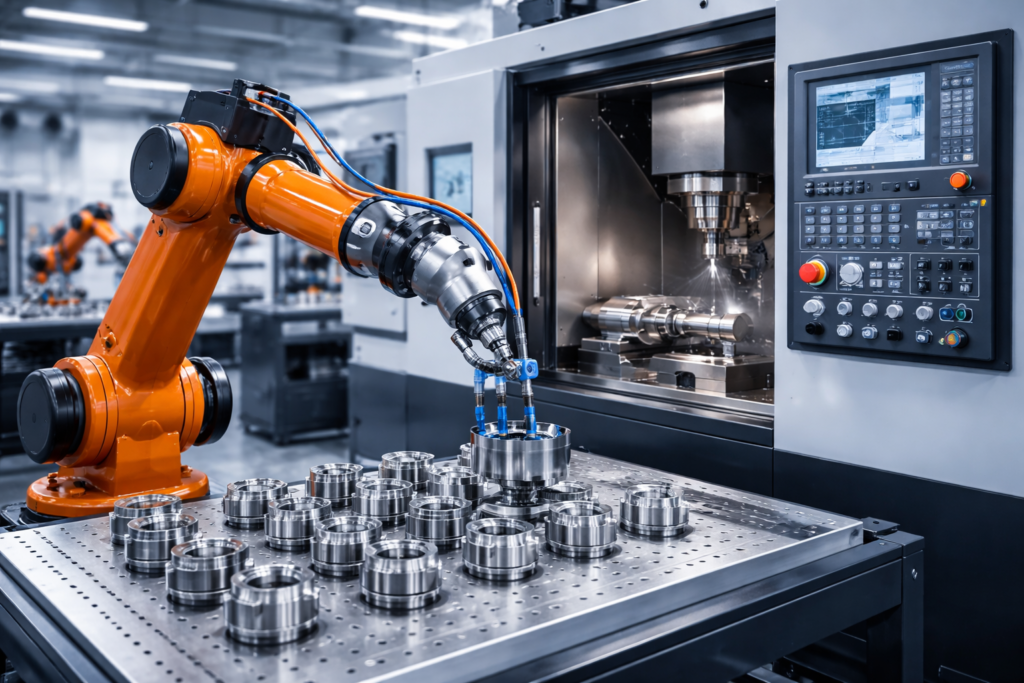
Understanding CNC Automation Technology:
CNC stands for Computer Numerical Control. It is a type of machine that uses computer commands to shape metal, plastic, or other materials. Instead of a person guiding tools by hand, a CNC Automation machine follows coded instructions. These include details about where to cut, how deep, and how fast.
The main parts of CNC machine are :
- Controllers: The brain of the machine that interprets commands.
- Motors: Power the movement of the tools.
- Sensors: Keep everything aligned and precise during work.
CNC technology replaced manual machining, making processes faster and more accurate. It allows for repeated actions with little change, which improves quality and reduces time.
The Role of Automation in CNC:
CNC automation adds systems that make the machine run on its own or with little help. It can load raw materials, change tools, and unload finished parts without human help. This is different from manual CNC work, where a person must supervise and make adjustments constantly.
The main benefits of CNC automation are:
- Lower labor costs
- Consistent quality
- Faster production
It shifts manufacturing from manual work to smart, streamlined processes.
Key Components of CNC Automation Systems:
CNC Control Software:
The core of CNC automation is the control software. Programming languages like G-code tell the machine exactly how to make parts. Engineers use CAD (Computer-Aided Design) to create designs, then turn these into G-code with CAM (Computer-Aided Manufacturing) software. These programs make sure the machine follows detailed instructions. Many systems connect with other manufacturing tools for a smooth workflow.
Mechanical and Hardware Parts:
Automation needs physical parts that make machines smarter and more flexible. These include:
Automated tool changers: Switch tools without help.
Robotic arms: Load and unload parts or handle complex tasks.
Conveyors and fixtures: Move raw materials and hold parts during work.
Sensors and feedback systems: Process for checking the real-time changes from accuracy.
The reason behind smooth and efficient manufacturing is that these parts were working together.
Data and Connectivity:
Smart factories link machines to collect and study data. IoT (Internet of Things) devices enable real-time monitoring. Cloud platforms store data for easy access and analysis. These systems help managers spot issues early and schedule maintenance to prevent costly downtime. Connecting machines also raises security risks. Strong cybersecurity is needed to protect sensitive manufacturing data.
Benefits of Using CNC Automation in Manufacturing:
Increased Precision and Consistency
Automation reduces mistakes. Machines follow exact instructions, producing parts that meet specifications every time. This improves quality and lowers defects and returns.
Higher Productivity and Efficiency
Automated CNC systems run nonstop, 24/7. This shortens cycle times and speeds up delivery. Running machines with minimal downtime helps factories stay competitive and flexible.
Cost Savings and Return on Investment
Though automation costs money upfront, companies see savings quickly. Fewer workers are needed for routine tasks. Precise cuts also cut waste. Many manufacturers report increased output and lower costs with automation.
Workforce Changes
Automation shifts roles from manual labor to monitoring and programming. Skilled workers are trained to keep systems running smoothly and make them better.. This creates new jobs and encourages workers to learn new skills.
Challenges and Things to Think About When Adopting CNC Automation:
High Upfront Cost:
Getting started with CNC automation can be expensive. Equipment, software, and setup costs add up. Many companies adopt automation in phases and measure the return at each step.
Technical Skills and Training:
Operating and maintaining CNC systems needs skilled technicians. Ongoing training helps staff stay prepared. Without proper support, systems can break down or not work well.
Cybersecurity Risks:
Connected machines face hacking threats. Protecting sensitive data and controlling access is vital. Regular updates and strong passwords are basic ways to keep systems safe.
Industry Needs:
Different industries have different needs. Aerospace parts need strict quality checks, while auto factories want high speed. Customizing automation helps meet these standards. Regulations also vary, so staying compliant is important.
Future Trends in CNC Automation:
Industry 4.0 Integration:
The trend is moving toward smart factories. Digital twins let manufacturers test production lines virtually. Predictive maintenance uses data to fix issues before they happen. These tools make manufacturing more flexible and less likely to break down.
Robotics and AI:
Collaborative robots, or cobots, work safely alongside humans. AI analyzes data to improve processes automatically. Robots are becoming smarter and more intuitive each year.
Sustainable Manufacturing:
Energy-efficient CNC systems save power and costs. Precise automation reduces waste and makes manufacturing greener. Companies that adopt eco-friendly practices can attract environmentally conscious customers and meet rules easily.
Conclusion:
CNC automation changes manufacturing. It improves quality, speeds up work, and lowers costs. The benefits are clear, but careful planning is needed before investing. Evaluate your current process, train your workers, and seek help from experienced providers. Watch for trends like Industry 4.0 and robotics. Staying updated helps you stay ahead in a busy market.
Adopting CNC automation is more than an upgrade — it is a key step to future-proof your manufacturing. The right choices today will keep your business relevant tomorrow.
WONDERFUL Post.thanks for share..more wait .. …