
Why Automation is a Game-Changer for CNC Machining
In today’s competitive manufacturing landscape, companies are continually looking for ways to improve efficiency, reduce costs, and maintain precision. Enter automation in CNC (Computer Numerical Control) machining – a revolutionary approach that’s transforming the manufacturing process. While CNC machining has always been synonymous with precision, integrating automation takes it to an entirely new level.
But why does this matter? Traditional machining processes face challenges like operator fatigue, longer cycle times, and errors. Automation addresses these pain points by offering unparalleled efficiency and consistency. Let’s dive deeper into how automation is redefining CNC machining and the benefits it brings to industries worldwide.
Exploring the Benefits and Technologies Behind CNC Automation
1. Understanding Automation in CNC Machining
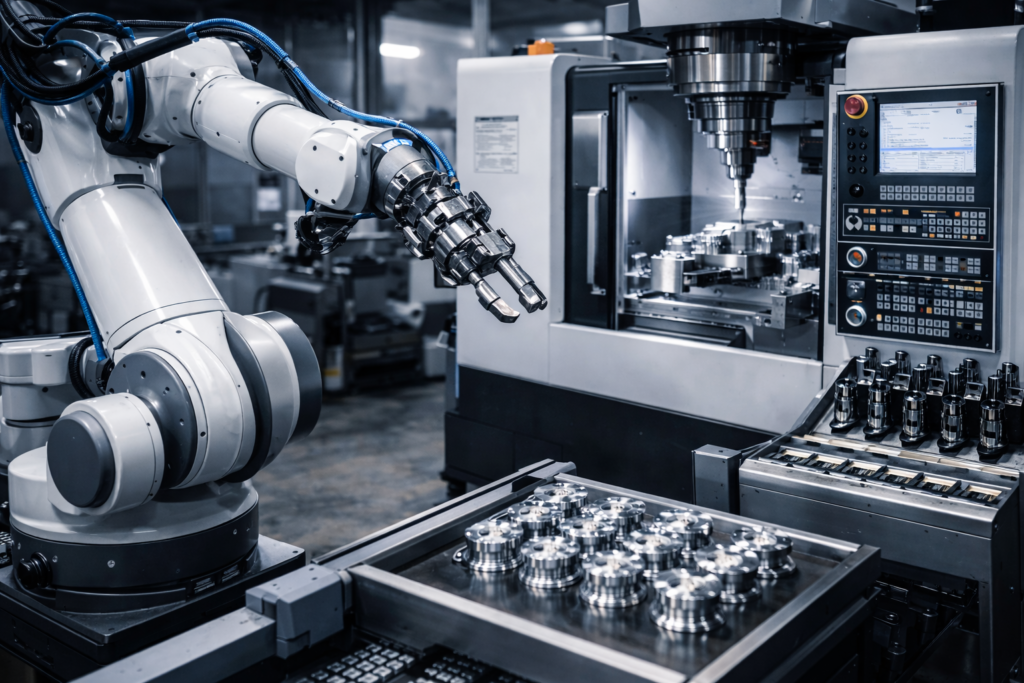
Automation in CNC machining involves integrating advanced technologies such as robotics, IoT-enabled systems, and software algorithms to streamline operations. Tasks like loading/unloading materials, tool changes, and quality checks are handled autonomously, minimizing human intervention.
2. Key Benefits of Automation in CNC Machining
- Enhanced Efficiency and Productivity: Automated CNC systems work 24/7 without breaks, significantly increasing output. This leads to faster project turnarounds and optimized resource utilization.
- Improved Accuracy and Consistency: Automation eliminates human error, ensuring each product meets strict tolerances and quality standards.
- Cost Reduction: While the initial investment may seem high, the long-term savings in labor costs, reduced waste, and faster cycle times make automation a cost-effective solution.
- Better Workplace Safety: With robots handling potentially hazardous tasks, workplace injuries are significantly reduced.
- Scalability: Automation provides the flexibility to scale operations seamlessly as demand grows.
3. Technologies Powering Automation in CNC Machining
- Robotic Arms: These are used for tasks like material handling and assembly, reducing the need for manual intervention.
- IoT Integration: Enables real-time monitoring of machine performance and predictive maintenance.
- AI-Driven Software: Enhances precision by optimizing tool paths and predicting machining outcomes.
Case Studies or Real-World Examples
Case Study: Tata Motors
Tata Motors, a leading automobile manufacturer in India, has successfully implemented automation in its CNC machining processes. By integrating robotic arms for material handling and IoT-enabled systems for quality monitoring, the company has reduced production time by 30% while ensuring impeccable precision in components. This transformation has not only enhanced their production capacity but also reinforced their position as an industry leader.
Technical Insights
For industries looking to implement automation, the following technical insights are critical:
- Machine Compatibility: Ensure your CNC machines are compatible with automation technologies like robotic interfaces and IoT devices.
- Customized Programming: Automated systems require tailored programming to achieve specific machining goals.
- Regular Maintenance: Automated CNC systems demand consistent upkeep to prevent downtime and maintain performance.
- Data Analytics: Leveraging data from IoT devices can provide actionable insights to further refine processes.
Conclusion
Automation in CNC machining is no longer a luxury but a necessity in today’s manufacturing ecosystem. It empowers businesses to achieve higher productivity, precision, and profitability. By embracing automation, companies like Tata Motors have set benchmarks for efficiency and innovation. It’s time to future-proof your operations – explore how Mechinex can help you transition seamlessly into the era of automated CNC machining.