
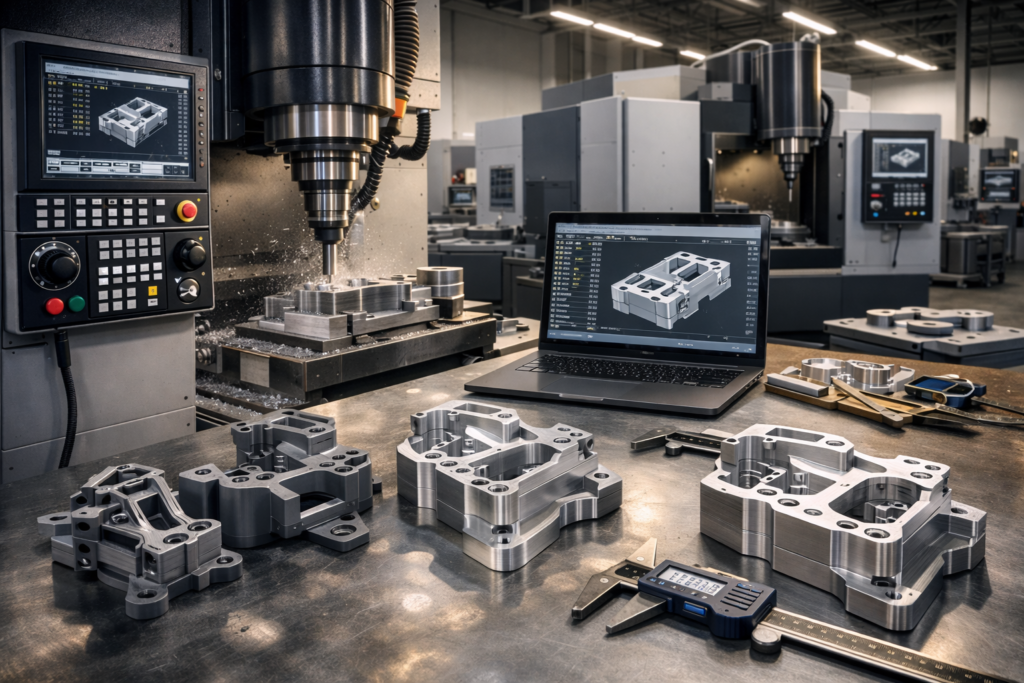
Speed Meets Precision in Prototyping
In the competitive manufacturing world, prototyping is the foundation for innovation and success. It’s the stage where ideas come to life and are validated for production. However, traditional prototyping methods can be time-consuming, expensive, and prone to human error.
Enter CNC (Computer Numerical Control) machines—the game-changers in modern prototyping. With their precision, speed, and adaptability, CNC machines have revolutionized how manufacturers create prototypes, ensuring faster turn around times and reduced costs.
In this blog, we’ll explore how CNC machines enhance the efficiency of prototyping in manufacturing, with real-world examples from top Indian companies.
How CNC Machines Drive Prototyping Efficiency
1. Precision and Accuracy
CNC machines operate on pre-programmed software, eliminating human error and ensuring micron-level precision. For industries like aerospace, where tolerances are tight, CNC machines ensure prototypes are built to exact specifications.
- Example: Companies like HAL (Hindustan Aeronautics Limited) use CNC machines to develop aerospace components, ensuring unmatched precision.
2. Speed and Reduced Turnaround Time
Unlike traditional methods that require manual adjustments, CNC machines automate the entire process. This drastically cuts down the prototyping time, allowing manufacturers to iterate faster.
- A 5-axis CNC machine, for example, can fabricate complex prototypes in hours compared to the days taken by manual machining.
- Case Study: Maruti Suzuki used CNC machines during the design phase of the Maruti Swift. Prototypes that previously took weeks were completed in days, speeding up the car’s production timeline.
3. Cost-Effectiveness
Though CNC machines have higher upfront costs, their efficiency leads to significant savings in the long run:
- Material Optimization: CNC machines use material efficiently, reducing waste.
- Less Manual Labor: Automation reduces dependency on skilled labor, lowering operational costs.
4. Customization and Scalability
CNC machines excel at handling customized designs, making them perfect for prototypes that require unique specifications. Once the prototype is validated, the same machine can be scaled for mass production with minimal adjustments.
- Example: Bharat Forge, a leading Indian forging company, uses CNC machines to produce customized prototypes for automotive clients, ensuring faster approvals and production.
5. Seamless Integration with CAD/CAM Software
CNC machines integrate directly with CAD/CAM software, allowing designers to translate their digital blueprints into physical prototypes seamlessly. This integration ensures no loss of data and makes real-time modifications possible.
6. Improved Material Versatility
CNC machines can work with a variety of materials, including metals, plastics, and composites, making them versatile for different industries.
Case Study: Reliance Industries and CNC Prototyping
Reliance Industries, one of India’s largest conglomerates, leveraged CNC machines in their prototyping phase for high-precision petrochemical equipment. By investing in advanced CNC technology, Reliance reduced prototyping costs by 30% and accelerated product testing by 40%. This strategic use of CNC machines significantly impacted their ability to deliver cutting-edge solutions.
Technical Insights: Why CNC is the Future of Prototyping
- Multi-Axis Capabilities: 5-axis CNC machines provide unparalleled flexibility, enabling the creation of complex geometries in a single setup.
- Real-Time Monitoring: Advanced CNC systems now come equipped with IoT and AI-enabled monitoring, ensuring consistent quality during prototyping.
- Sustainable Manufacturing: CNC machines optimize material usage, contributing to greener manufacturing practices.
Conclusion: Transform Your Prototyping with CNC Machines
From precision and speed to cost-effectiveness and versatility, CNC machines are indispensable tools for modern manufacturers aiming to streamline prototyping processes. By adopting CNC technology, businesses can innovate faster, reduce production errors, and stay ahead of the competition.