
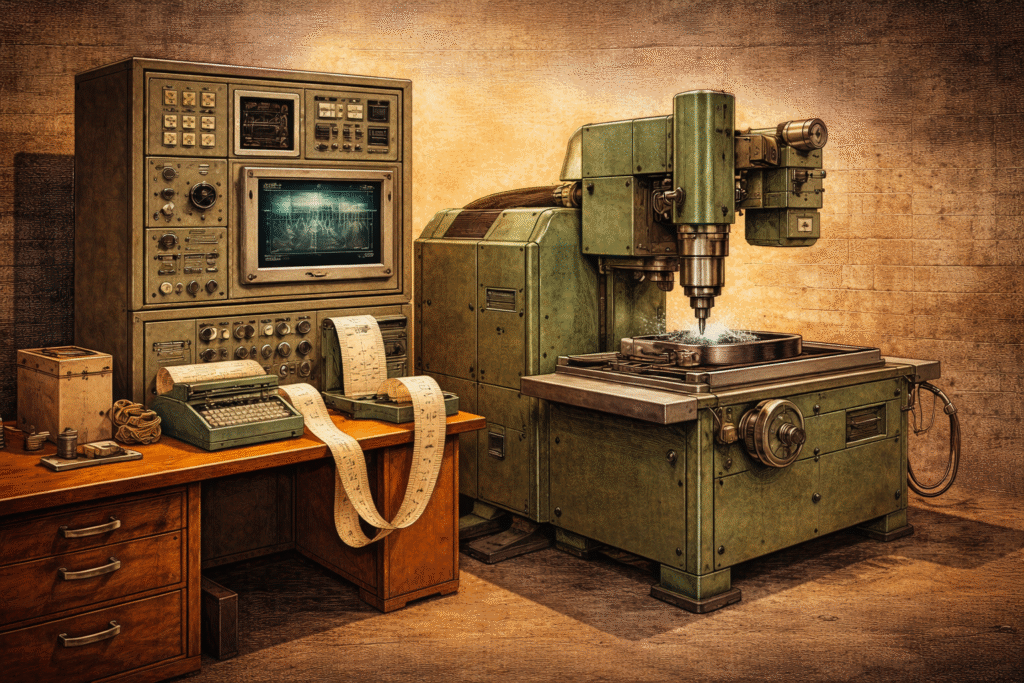
What Are CNC Machines?
CNC machines use pre-programmed computer software to control the movement of tools and machinery. Whether it’s cutting, drilling, milling, or lathing, these machines deliver pinpoint accuracy and repeatability that traditional methods simply cannot match.
Real-World Example: Tata Motors’ Adoption of CNC Machines
One of India’s largest and most respected companies, Tata Motors, has embraced CNC technology in its manufacturing plants. By integrating CNC machines into their production lines, Tata Motors has:
- Reduced production cycle times by 30%
- Achieved near-zero defects in critical components
- Enhanced their ability to produce intricate designs for automotive components
This adoption not only improved operational efficiency but also elevated the quality of their vehicles, ensuring customer satisfaction and global competitiveness.
As technology continues to evolve, CNC machines are set to become even more powerful, cementing their role as a cornerstone of modern manufacturing. The Need for Precision in Modern Manufacturing
In today’s fast-paced industrial era, the demand for precision, efficiency, and scalability in manufacturing has never been higher. Traditional manufacturing methods often struggled with inconsistency, longer production times, and human error. Enter CNC (Computer Numerical Control) machines- a technological marvel that has transformed the manufacturing landscape. These machines combine automation, precision, and adaptability to redefine how products are designed, prototyped, and mass-produced.
But what exactly makes CNC machines such a game-changer? Let’s dive into the revolution they’ve sparked in modern manufacturing.
Benefits of CNC Machines
- Precision & Accuracy CNC machines operate with sub-micron accuracy, ensuring every product meets the tightest tolerances. This is especially crucial in industries like aerospace, healthcare, and electronics.
- Increased Efficiency By automating tasks, CNC machines can run 24/7 without fatigue, dramatically increasing production speeds.
- Cost-Effectiveness While the initial investment in CNC machinery can be high, the long-term savings from reduced waste, faster production, and lower labour costs are significant.
- Versatility CNC machines can handle a wide range of materials, including metals, plastics, wood, and composites. With multi-axis capabilities, they can produce complex shapes that were once impossible.
Technical Insights
CNC machines utilize G-code, a programming language that tells the machine what to do, such as:
- Where to move
- How fast to move
- What operations to perform
The latest advancements in CNC technology include:
- 5-Axis CNC Machines: Allow for greater flexibility in machining intricate parts.
- IoT Integration: Enables real-time monitoring and predictive maintenance.
- Hybrid CNC Machines: Combine additive manufacturing (3D printing) with traditional CNC capabilities for unprecedented innovation.
Conclusion
CNC machines have redefined modern manufacturing by bringing precision, efficiency, and scalability to industries worldwide. Their ability to produce complex designs with unmatched accuracy has made them indispensable in industries ranging from automotive to aerospace.