
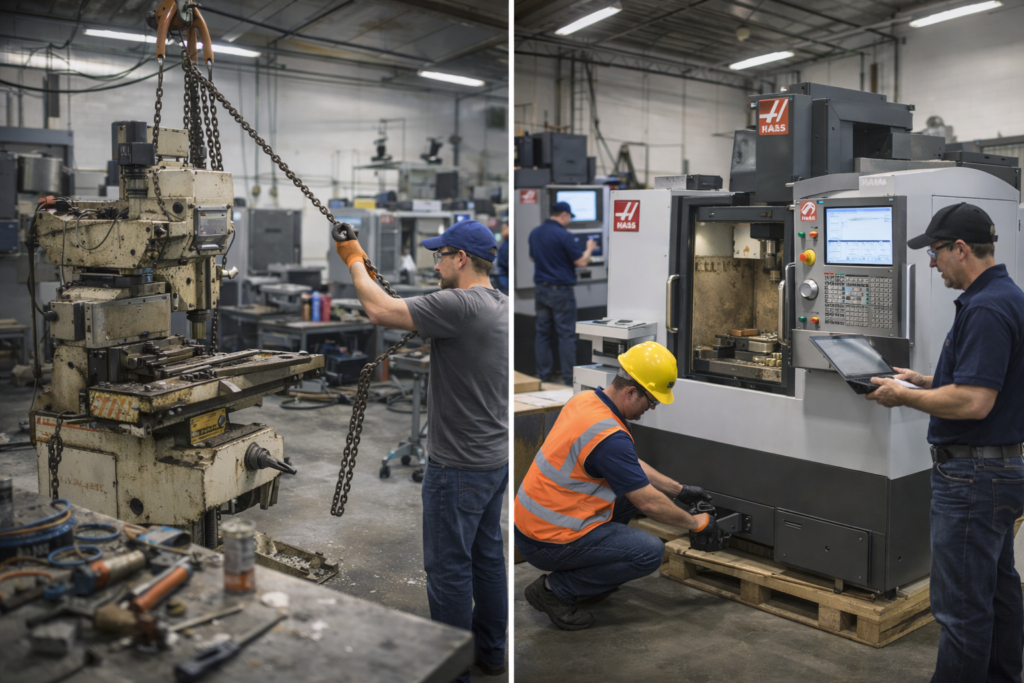
Why Upgrading Your Workshop Matters: Introduction
Are you ready to take your workshop to the next level? The transition to a Computer Numerical Control (CNC) machine can revolutionize your production processes by increasing precision, efficiency, and scalability. However, buying your first CNC machine is a significant investment, and without proper planning, it’s easy to fall into common pitfalls. Whether you’re a small-scale artisan or a mid-sized manufacturer, understanding the essentials can save you time, money, and headaches.
Key Factors to Consider
1. Understand Your Requirements
Before making a purchase, identify your specific needs. Ask yourself:
- What materials will you be machining? (e.g., wood, metal, plastics)
- What type of products do you intend to produce?
- What level of precision do you require?
By understanding your goals, you can narrow down your options to machines that meet your requirements.
2. Types of CNC Machines
Not all CNC machines are created equal. Here are some popular options:
- Milling Machines: Ideal for cutting and shaping materials.
- Lathes: Perfect for cylindrical parts.
- Laser Cutters: Great for intricate designs and engraving.
- Plasma Cutters: Used for cutting metals.
Evaluate which type aligns with your workshop’s needs.
3. Budget Considerations
While it’s tempting to go for the latest model, you’ll need to balance your budget with your requirements. Consider:
- The initial cost of the machine.
- Ongoing maintenance expenses.
- Tooling and software costs.
4. Space and Power Requirements
CNC machines vary in size, and some require significant space and power. Before purchasing, assess:
- Your workshop’s available space.
- Electrical requirements.
- Ventilation and safety measures.
5. Software and Training
A CNC machine is only as good as its operator. Ensure you have access to:
- User-friendly CAD/CAM software.
- Training resources for your team.
Case Study: An Indian Success Story
Case Study: Reliance Engineering Solutions Reliance Engineering, a mid-sized tool manufacturing company in Pune, was initially using manual machines. After upgrading to CNC milling machines, they experienced:
- A 40% increase in production efficiency.
- 25% reduction in material waste.
- Enhanced product quality, leading to more client contracts.
This transformation was possible due to meticulous planning and choosing the right machine.
Technical Insights
- Spindle Speed: Choose a machine with adjustable spindle speeds for versatility.
- Tool Holders: Ensure compatibility with standard tool holders for easier replacements.
- Build Quality: Opt for durable frames, especially if you work with heavy materials.
Conclusion
Investing in your first CNC machine can unlock unparalleled opportunities for growth. By carefully evaluating your needs, understanding machine types, and considering space, budget, and training, you’ll make an informed decision that ensures long-term success. Don’t rush the process—take your time, do your research, and consult experts if necessary.