
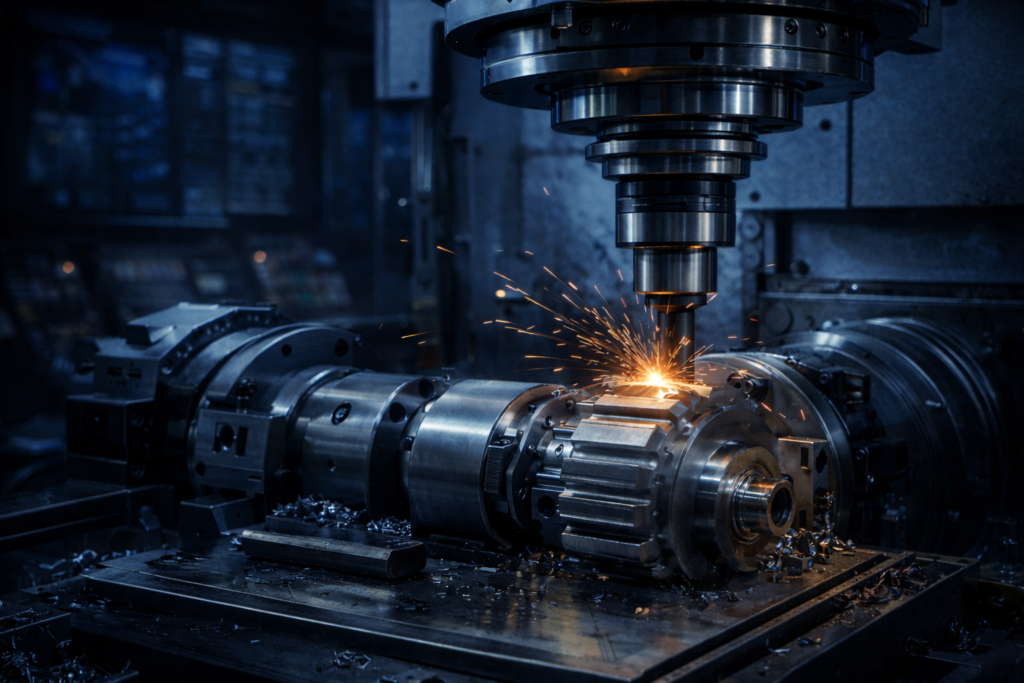
The Need for Precision in Modern Engineering
In today’s highly competitive industrial landscape, precision engineering plays a pivotal role in creating high-quality products across industries like aerospace, automotive, and healthcare. Whether it’s crafting intricate components for jet engines or producing flawless medical implants, the demand for precision has never been greater.
Achieving such precision consistently is nearly impossible with manual methods. Enter CNC (Computer Numerical Control) machines—the backbone of modern precision engineering. These machines enable manufacturers to produce components with unparalleled accuracy and repeatability.
This blog explores why CNC machines are indispensable for precision engineering, diving into their benefits, real-world applications, and technical advantages.
Why CNC Machines Are Game-Changers for Precision Engineering
1. Unmatched Accuracy and Consistency
CNC machines use computer programming to guide cutting tools, ensuring every movement is precise to within a fraction of a millimeter. This level of accuracy guarantees uniformity in every part produced, making CNC machines ideal for industries where tolerances are extremely tight.
- Example: Indian company Bharat Forge relies on CNC machines to manufacture high-precision automotive and aerospace components. This consistency helps them meet global standards and maintain their reputation for quality.
2. Speed and Scalability
CNC machines excel at producing both prototypes and large production runs efficiently. Once a program is set, CNC machines can operate continuously, significantly reducing production time.
- Case Study: Mahindra & Mahindra, a leading automotive manufacturer, implemented CNC technology to scale up the production of precision engine parts. This enabled the company to meet rising demands without compromising on quality.
3. Ability to Handle Complex Geometries
Traditional machining struggles with complex designs, but CNC machines can easily handle intricate geometries thanks to multi-axis capabilities.
- 5-Axis CNC Machines can process parts from multiple angles in a single setup, eliminating the need for manual repositioning.
- Example: ISRO (Indian Space Research Organisation) uses CNC technology to craft components for satellites and rockets, where intricate designs and flawless precision are non-negotiable.
4. Cost-Effective Manufacturing
Although CNC machines involve a higher upfront cost, they reduce long-term expenses:
- Material Efficiency: CNC programming minimizes waste by cutting with precision.
- Reduced Labor Costs: Automation eliminates the need for skilled labor for repetitive tasks.
- Low Error Rates: Fewer defects save money on rework and scrapped materials.
5. Versatility Across Materials
CNC machines can work with diverse materials such as metals, plastics, and composites, enabling manufacturers to meet the demands of various industries.
- Example: Tata Steel uses CNC machines to produce precision steel parts for multiple sectors, from construction to automotive.
6. Integration with Modern Technologies
CNC machines now come equipped with IoT (Internet of Things) and AI (Artificial Intelligence) capabilities, enabling real-time monitoring and predictive maintenance. These advancements further enhance precision and operational efficiency.
Technical Insights: The Core Benefits of CNC Machines
- Multi-Axis Functionality: 3-axis, 4-axis, and 5-axis CNC machines offer flexibility to create complex shapes.
- CAD/CAM Integration: CNC machines seamlessly convert digital designs into physical components without data loss.
- Micron-Level Tolerances: CNC machining can achieve tolerances as tight as ±0.002 mm, which is essential for high-stakes industries like aerospace and healthcare.
Case Study: How Hero MotoCorp Improved Precision Manufacturing
Hero MotoCorp, India’s largest two-wheeler manufacturer, faced challenges in producing high-precision engine components. By investing in advanced CNC machines, the company reduced production errors by 25% and increased production speed by 40%. The result? Enhanced product quality and faster time-to-market.
Conclusion: CNC Machines – The Future of Precision Engineering
Precision engineering is critical for industries looking to deliver high-quality, reliable products. CNC machines have proven to be indispensable in achieving this level of precision and consistency. Whether it’s reducing production time, lowering costs, or enabling complex designs, CNC machines are the ultimate solution for manufacturers.