
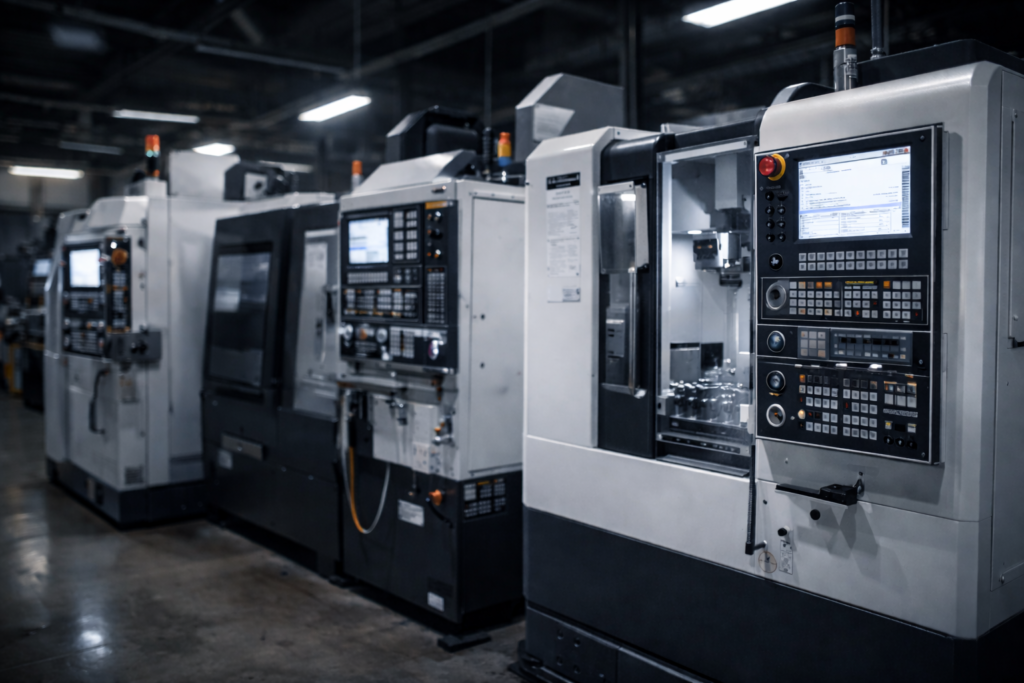
Finding the Perfect Fit for Your Business
In today’s competitive manufacturing landscape, investing in the right CNC (Computer Numerical Control) machine is more than just a necessity—it’s a strategic move that can significantly impact your productivity, efficiency, and bottom line. With so many options available, ranging from entry-level models to advanced 5-axis machines, the question remains: how do you choose the right CNC machine for your business?
This guide will walk you through the key factors to consider, provide technical insights, and showcase how businesses like yours have benefited from making the right investment. Let’s dive in.
Steps to Choose the Right CNC Machine
1. Understand Your Business Requirements
Before purchasing a CNC machine, assess your business needs:
- Material Types: What materials will you be machining? (e.g., aluminum, steel, wood, or plastic).
- Production Volume: Are you focusing on low-batch custom production or high-volume manufacturing?
- Precision Requirements: What tolerances are necessary for your parts?
By answering these questions, you can narrow down whether you need a lathe, milling machine, or a multi-functional CNC.
2. Evaluate Machine Features and Capabilities
a. Axes Configuration
CNC machines come in various configurations, such as 3-axis, 4-axis, and 5-axis. A 3-axis machine is suitable for simple operations, while a 5-axis machine is ideal for complex geometries.
b. Speed and Spindle Power
A machine’s spindle speed and power affect the type of materials it can handle and its efficiency in cutting or drilling. For example, a higher spindle power is ideal for cutting metals like titanium.
c. Automation and Software
Modern CNC machines often come with automated tool changers, advanced simulation software, and IoT-enabled features for real-time monitoring. Investing in automation can reduce operational costs in the long term.
3. Analyze Cost vs. Value
While upfront costs are a major consideration, don’t overlook factors like maintenance, training, and operational efficiency. Opt for a machine that offers the best long-term ROI (return on investment).
Case Study: HowTata Motors Optimized Production with CNC Technology
Challenge: Tata Motors needed a solution to manufacture high-precision automotive components at scale while reducing production time.
Solution: They invested in 5-axis CNC machines, which allowed them to:
- Produce complex parts with fewer setups.
- Increase efficiency by 40%.
- Maintain tight tolerances required for automotive safety standards.
Result: Tata Motors saw a significant improvement in product quality and faster turn around times.
Technical Insights: Breaking Down CNC Machine Specifications
When comparing CNC machines, focus on these key technical specs:
- Work Envelope: Ensure the machine’s dimensions can accommodate your largest parts.
- Tolerance Levels: For industries like aerospace or medical, machines with ultra-high precision are essential.
- Control System: Popular options include FANUC, Siemens, and HAAS. Choose one that’s compatible with your existing workflow.
- Tool Capacity: Machines with larger tool capacities reduce downtime for tool changes.
Conclusion: Empowering Your Business with the Right CNC Machine
Choosing the right CNC machine is a pivotal decision that can transform your business operations. By understanding your needs, evaluating technical specs, and considering long-term value, you can make an informed decision that drives growth and efficiency.
At Mechinex, we specialize in providing state-of-the-art CNC solutions tailored to your unique needs. Explore our range of high-performance CNC machines to find the perfect fit for your business.